Need garage door installation in Old Westbury?
- Clear steps before you pick up a phone
- Providers in our network do the work
- Repair, new doors, and spring work
- Request an estimate with no obligation
No obligation
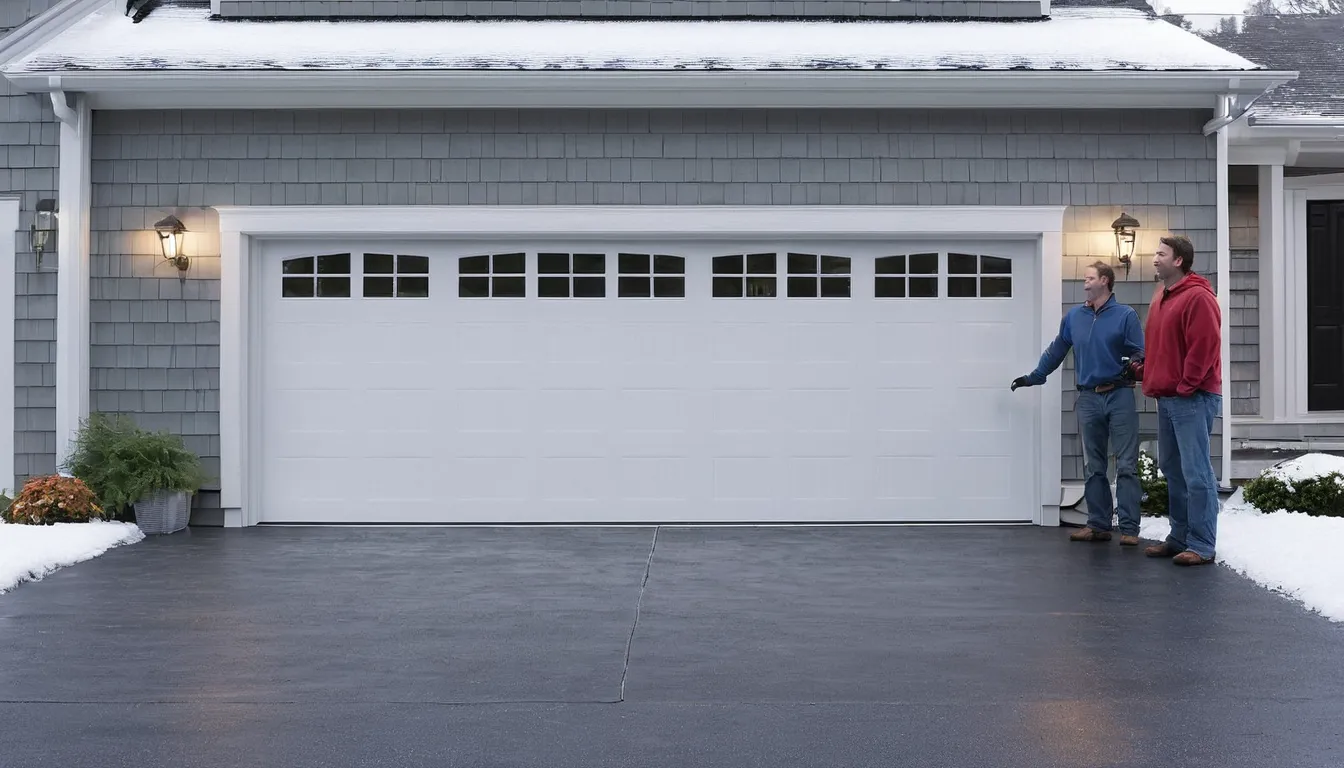
An old door gives warning signs. A panel bends. The door hangs crooked. The opener groans. Each week you wait, the track wears and the motor strains. A new door can stop that slide and keep winter weather out of your garage.
Interviewswelcome Garage Doors is a referral service. We do not install doors. We connect you with independent providers in our network who measure your opening, take out the old door, and set up the new one. You compare written estimates and choose. This page shows what is safe to do yourself, where to stop, and what to ask before you say yes.
Look at the door first. Don't lift it. Ask a few plain questions. Is it past 15 or 20 years old? Are panels cracked, dented or soft with rot? Does it need a fix every season? If you said yes twice, a new door may cost less over time than repeat visits.
Some signs show up fast. A panel folds when the door closes. The door hangs crooked. Rollers pop out of the track. A cable frays. Stop using the door right then. Step back and keep kids and pets clear. A door stuck open leaves your garage exposed, so ask a provider about emergency garage service.
A crooked door strains the opener. The motor groans and the track wears. In a few days a loose bracket can turn into a bent rail. Wipe the tracks, check the bolts you can see, and write down what you notice. Notes help a provider size up the job.
Cold, snowy winters are hard on old doors. Thin panels dent. Seals harden and crack. Snowmelt seeps under a worn bottom seal and sits on the slab. Older homes with stone or block foundations often have tight, uneven garages, so weather gets in fast. Waiting a whole season often means a bigger bill.
A provider measures the opening, removes the old door, and sets the new one. Expect these steps:
You can do plenty before the visit. Clear the floor and the walls near the door. Move cars, bikes and shelves. Measure the opening and snap photos. Read any label on the old door. Check that the outlet near the opener works. These jobs save time and keep the work area safe.
Stop at the spring. A torsion spring holds a lot of force, and cables stay under load too. Do not loosen, cut or unwind them. A provider has winding bars and training. If your old door has a broken spring, ask about garage door spring repair or safe removal before anyone touches it.
Steel is common, sturdy and easy to paint. Insulated steel helps in cold weather. Wood looks warm but needs upkeep. Aluminum and glass suit modern homes. Fiberglass handles damp air near the coast. Wood-look composite is a middle road. Ask to see a sample panel.
If the garage shares a wall with living space, or sits under a bedroom like many Cape Cod style homes, insulation pays off. Ask about foam-filled panels and thicker seals. A basement garage can also pull cold air into the house.
Older houses are rarely square. Measure width in three spots and height in three spots. Use the smallest number. Check headroom above the opening and room on each side. Write the numbers down and share them. The provider will still check on site.
New doors need straight, plumb tracks. Track alignment decides how quietly the door runs. On an older frame, walls may have shifted over the years. A provider checks level and fixes the mounting before hanging panels. Ask if new tracks and rollers are part of the estimate.
A new door is a good time for a new garage door opener. An old opener may struggle with the weight of an insulated door. Newer ones run quieter, add battery backup, and use safety sensors. Belt drives hum softly. Chain drives often cost less. Ask the provider to match motor strength to door size.
Be picky. Ask for a written quote that lists the model, materials, hardware and haul-away. Ask about warranty terms in writing. Ask whether the provider is licensed and insured where your area requires it. Interviewswelcome Garage Doors refers you to independent providers in our network and does not do the work, so confirm every detail with the provider.
If you have an HOA, read its rules on color, panel style and windows before you order. Many want approval first. Take a photo of the house and mark your pick. Multi-family buildings may need an owner's sign-off too.
Watch the door run a few times. Listen for rubbing. Test the auto-reverse by laying a board flat under the door. It should reverse on contact. Wipe the tracks each season, check visible bolts after the first month, and keep your paperwork in one folder.
Snow, ice and a stiff old door can leave a car stuck inside. Some providers offer emergency garage service. Request a callback to check provider availability in your area.
The provider checks width, height, headroom and side room so the new door fits your frame.
Springs, panels and hardware come down safely and get hauled away from your driveway.
New panels, tracks, rollers and springs are set, aligned and balanced as one system.
A new opener can be matched, then sensors and auto-reverse are tested before sign-off.
Prices change with size, material, insulation and your home. These are typical U.S. ranges, not quotes. Always get a written quote that lists every part of the job before you agree to work.
| Item | Typical range | Notes |
|---|---|---|
| Single steel door, installed | $800 – $2,500 | Basic panels, standard hardware |
| Double steel door, installed | $1,200 – $4,000 | Wider openings need heavier springs |
| Insulated door, installed | $1,500 – $5,000 | Better for cold and attached garages |
| Wood or custom door | $3,000 – $10,000 | Style, finish and upkeep add cost |
| New opener, installed | $350 – $900 | Belt drives and battery backup cost more |
| Old door removal and haul-away | $50 – $300 | Sometimes bundled into the quote |
Share your door size, what is wrong, and whether you want a new opener. Photos help a lot.
We refer you to an independent provider in our network who serves your area.
Check materials, hardware, warranty terms and haul-away before you pick a door and a date.
Clear the garage floor and walls. The provider removes the old door, sets the new one, and tests safety.
Request an estimate with no obligation, then compare what local providers offer.
Each provider runs their own business and sets their own prices.
We tell you which prep jobs are safe and where to stop.
Providers in our network know cold winters, snowmelt and older garage frames.
Many installs take a few hours to most of a day. Time depends on door size, the opener, and the shape of your tracks and frame. Ask the provider for a window when you book.
You can prep the area and measure. Springs and cables hold dangerous force, and heavy panels are hard to hold. Most homeowners are safer letting a provider handle the install.
Not always, but often. An old opener may not handle a heavier insulated door and may lack modern safety sensors. Ask the provider to check the motor strength and the age of your opener.
Door stuck, noisy, or hanging crooked? Request a callback or send a request, and a local provider in our network can follow up.
No obligation